Showing posts with label Pearl Harbor attack. Show all posts

Sunday, September 22, 2019

1941


__________


“I fought the war from the cockpit of a Zero, and can still remember the faces of those I killed. They were fathers and sons, too. I didn’t hate them or even know them.”


Kaname Harada

__________


In 1941, the Zero was superior to anything the U.S. could fly.


January 6: In his State of the Union Address, FDR lays out both the plan for “Lend-Lease”  and the famous “Four Freedoms.”


NOTE TO TEACHERS: If I were teaching modern U.S. history, I might ask students to consider the ideals and issues laid out by Roosevelt eighty years ago, and decide which, if any, remain worth fighting for today.


First, he notes, 

What I seek to convey is the historic truth that the United States as a nation has at all times maintained clear, definite opposition, to any attempt to lock us in behind an ancient Chinese wall while the procession of civilization went past. Today, thinking of our children and of their children, we oppose enforced isolation for ourselves or for any other part of the Americas.


Second, he outlines the growing danger, 

Every realist knows that the democratic way of life is at this moment being directly assailed in every part of the world – assailed either by arms, or by secret spreading of poisonous propaganda by those who seek to destroy unity and promote discord in nations that are still at peace.


During 16 long months this assault has blotted out the whole pattern of democratic life in an appalling number of independent nations, great and small. The assailants are still on the march, threatening other nations, great and small.


Therefore, as your President, performing my constitutional duty to "give to the Congress information of the state of the Union," I find it, unhappily, necessary to report that the future and the safety of our country and of our democracy are overwhelmingly involved in events far beyond our borders.


He notes that the U.S. is building up its defenses and arming for war, should it come, but, 

To change a whole nation from a basis of peacetime production of implements of peace to a basis of wartime production of implements of war is no small task. And the greatest difficulty comes at the beginning of the program, when new tools, new plant facilities, new assembly lines, and new ship ways must first be constructed before the actual materiel begins to flow steadily and speedily from them.


As for the democratic nations still in the fight, Roosevelt tells Congress, 

The time is near when they will not be able to pay for them all in ready cash. We cannot, and we will not, tell them that they must surrender, merely because of present inability to pay for the weapons which we know they must have.


I do not recommend that we make them a loan of dollars with which to pay for these weapons—a loan to be repaid in dollars.


I recommend that we make it possible for those nations to continue to obtain war materials in the United States, fitting their orders into our own program. Nearly all their materiel would, if the time ever came, be useful for our own defense. …


For what we send abroad, we shall be repaid within a reasonable time following the close of hostilities, in similar materials, or, at our option, in other goods of many kinds, which they can produce and which we need.


He expresses confidence in the spirit of the American people, this way: 

For there is nothing mysterious about the foundations of a healthy and strong democracy. The basic things expected by our people of their political and economic systems are simple. They are:


Equality of opportunity for youth and for others.


Jobs for those who can work.


Security for those who need it.


The ending of special privilege for the few.


The preservation of civil liberties for all.


The enjoyment of the fruits of scientific progress in a wider and constantly rising standard of living.


__________ 

The Four Freedoms

__________ 


Norman Rockwell painted "The Four Freedoms."
This is the first.


Then he lays out a vision of the kind of world the U.S. will be fighting for, should it become necessary to fight: 

In the future days, which we seek to make secure, we look forward to a world founded upon four essential human freedoms.


The first is freedom of speech and expression—everywhere in the world.


The second is freedom of every person to worship God in his own way—everywhere in the world.


The third is freedom from want—which, translated into world terms, means economic understandings which will secure to every nation a healthy peacetime life for its inhabitants—everywhere in the world.


The fourth is freedom from fear—which, translated into world terms, means a world-wide reduction of armaments to such a point and in such a thorough fashion that no nation will be in a position to commit an act of physical aggression against any neighbor—anywhere in the world.


That is no vision of a distant millennium. It is a definite basis for a kind of world attainable in our own time and generation. That kind of world is the very antithesis of the so-called new order of tyranny which the dictators seek to create with the crash of a bomb.


Congress then appropriates $7 billion to make Lend-Lease work. 


* 

June 25: FDR signs an executive order admitting blacks to federal job-training programs and forbidding racial discrimination by companies doing federal defense contracting work. By the end of the war, two million blacks are employed in defense industries. 

Still, George Wolfskill paints a bleak picture of the era, faulting the Democratic Party: 

A party that was not rebuild at the grassroots, not committed to liberalism at the grassroots, was not going to change much at the local levels. Blacks would ride in the back of the bus, when they were not being lynched. Sharecroppers would still be swindled by local landowners. Political decisions would still be made by minions of political bosses lounging around brass spittoons in the court house, by lobbyists supplying the liquor and girls in the state capitals. And Roosevelt’s “economic royalists” would still buy or browbeat their way out of behaving themselves and paying their taxes. (1127/178) 


*


July: Japan forces Vichy France to surrender bases in south Indo-China. The U.S. freezes all Japanese assets, which means “a complete embargo and the severing of all trade relations.” (1127/61)


*


September 26: Pitching for the Cleveland Indians, Bob Feller gives up only one hit, a topper that rolled down the line toward third base. The St. Louis Browns did score two runs, but the Indians prevailed 3-2. 

Feller would not pitch another game for almost four years, as World War II intervened, and he served in the U.S. Navy.


*

“A killer of men.”

December 7: Kaname Harada takes part in the raid on Pearl Harbor, a fighter ace, last surviving combat pilot from the raid; his part: to protect Japanese carriers rather than fly to Pearl. He was injured after a crash-landing on Guadalcanal, later trained suicide pilots, and was long plagued by nightmares after the war. “I realized the war had turned me into a killer of men and that was not the kind of person I wanted to be.” “I fought the war from the cockpit of a Zero, and can still remember the faces of those I killed. They were fathers and sons, too. I didn’t hate them or even know them.” 

The “Zero” name came from the last digit of the year the plane entered service, 2600 on the Imperial calendar, 1940 on the Gregorian. He downed five U.S. torpedo planes in one morning at Midway, but had to ditch after his carrier was sunk and he ran out of fuel. Four months later, a Marine pilot shot him down over Guadalcanal. He was badly injured and had to wait ten days before a warship could take him off the island. 

He met his adversary after the war – Joe Foss, who went on to become the governor of South Dakota, AFL commissioner and president of the NRA. (NYT obituary; 5/6/16)


* 

Robert Thacker is piloting one of several newly built B-17’s that day, on a flight from the Mainland to Hawaii. He arrives over Pearl Harbor in the middle of the attack, at first unaware what is happening. Now, as he began his descent to land at Hickam Field, he and the rest of his crew were astonished to see Japanese bombers and fighters roaming the skies and black smoke rising from the airfield and nearby military installations. Moments later, an enemy fighter shot off the front landing gear of Thacker’s bomber and they skidded to a stop. Then they “bailed out” and headed for a nearby swamp to take cover. 

Thacker would live to fly 80 combat missions during World War II, dropping bombs of his own on both German and Japanese targets before fighting ended. He went on to become an elite Air Force test pilot, and served in combat during the Korean War and the Vietnam War. 

Unlike so many men and women killed on December 7, he lived a long and happy life, dying in 2020, at age 102.


*

“All you worried about was staying alive.”

On that fateful morning, Boatswain’s Mate Ken Potts, a crane operator on USS Arizona, had been on weekend liberty, and was still ashore when the attackers struck. He heard the call for all sailors to return to their ships, but before he could reach the battleship it was blown to bits. 

“When I got back to Pearl Harbor, the whole harbor was afire,” he later recalled. “The oil had leaked out [of several damaged or sunken warships] and caught on fire and was burning.” 

He remembered dragging other sailors out of the oily water, some injured, some burned, some close to slipping under the waves forever. “We couldn’t think much about it,” Potts explained. “You don’t think much of anything, I guess. You’re in shock. All you worried about was staying alive.” 

Potts was assigned to duty at Pearl Harbor for the rest of the war, also lived to age 102, had children, got to see grandchildren and great grandchildren grow up, before he died. Only 93 sailors and Marines on board the Arizona when it blew up survived. Eleven hundred and seventy-seven were not so lucky. 

Potts and 241 more were ashore at the time of the attack.


*

“Big red meatball.” 

Joe Whitt was another survivor of the attack. On the morning of December 7, he once told this blogger and his students (Joe would come visit my old school), he was taking a guitar lesson below decks on the USS San Francisco, a heavy cruiser. He had paid another sailor $5 to teach him. The call to battle stations interrupted the lesson, and Joe rushed up to the main deck, where he was handed a rifle, and started shooting as Japanese aircraft whizzed past. He could see the “big red meatball” painted on their fuselages, didn’t believe he hit anything, but felt better just firing. 

I knew Joe had been at Pearl Harbor when I invited him to speak, but he been in several other fierce battles. In one night fight, near Guadalcanal, the San Francisco was hit 47 times by enemy fire. When the battle seemed over, a launch with medical personnel from the USS Juneau was sent over to offer help. “I don’t know why they sent us over here,” remarked one of the men from the Juneau. “You’re wrecked and probably going to sink.” Moments later the Juneau was ripped by a huge explosion, broke in half, and sank. Joe told my classes (or I misunderstood what he said) that a Japanese battleship had fired a last salvo over the horizon, before retreating as the sun came up. In fact the Juneau had been hit by torpedoes, and the main magazine exploded. 

There were 697 men aboard, and 597 went down with the ship. The rest ended up floating in the water, but the U.S. Navy had to retreat, and days passed before anyone could return to pick up survivors. By that time, only ten men in the water were alive. I don’t know how many men who came over to the USS San Francisco made it to the end of the war, but Joe never forgot that moment. 

Every year, when he would tell that story, “All those American boys…” he would say, he would have a catch in his throat, and I would have to pretend, in the back of my class, that I wasn’t tearing up. 

The five Sullivan brothers, George, Francis, Joseph, Madison and Albert, were all killed when the Juneau sank.


Joe is fourth from the left. 
I was able to get a group of veterans to speak to all our students every year.


*

 The good fortune of Jessie Mahaffey.

    Jessie Mahaffey was another lucky survivor of the attack. He told his story to a radio station many years later.

    He and five other sailors were chatting as they scrubbed the deck of the Oklahoma when they “heard a siren, saw planes and smoke,” he said, adding, “It must have only gone on for 45 minutes, but it was crazy.”


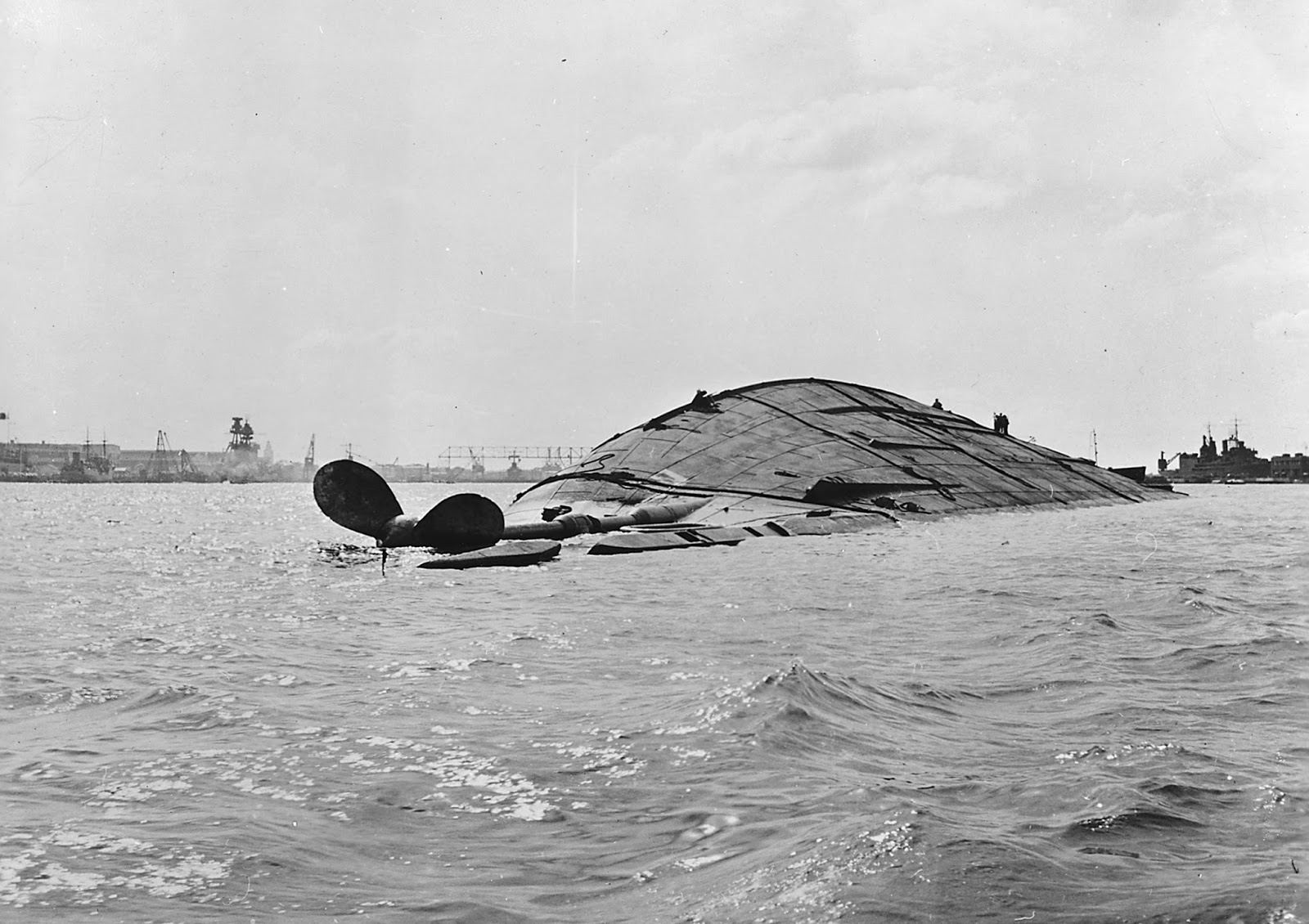
    The Oklahoma was struck by as many as nine torpedoes. Within minutes, the battleship capsized, trapping hundreds of men below deck. “It didn’t take that long to come back to the other side,” he said. “It turned upside down and we had to slide over the bottom of the ship into the water.”


    He managed to swim to the U.S.S. Maryland, another battleship that was moored at Pearl Harbor.


    Mahaffey was lucky even to be above deck that morning, since he had recently been shifted from duty in the powder room. Hundreds of crew members were lost in the attack when the battleship rolled over. 

    So, Mahaffey was blessed and 429 sailors on the Oklahoma never saw another sun rise over Pearl Harbor. 

    On November 30, 1942, just before midnight, Mahaffey’s luck held again. This time, the ship he was serving aboard, the U.S.S. Northampton, was hit by a pair of Japanese torpedoes and sank in the dark. 

    He and other survivors clung to life rafts until dawn. 

    Jesse had just turned nineteen when the war began but lived a long and happy life. He and his wife Mary Ethel Mahaffey had a long and happy marriage. She died in 2003, but Jesse lived to the age of 102, dying in 2025. He was survived by two sons, many grandchildren and great-grandchildren – and one great-great-grandson.


* 

    One of the sailors who died when the USS Oklahoma rolled over and sank was Victor Patrick “Pat” Tumlinson. In 2019, after advanced DNA testing had been used, his remains were identified, along with the remains of around 200 other sailors. He was buried at last, in his hometown, Raymondville, Texas.  

    Cathy Ayers, the sailor’s niece, would say that Pat’s mother never forgot the loss of her son. “Until the day she died, she said, ‘I wish they could bring my boy home,’” Ayers explained. (Time: 12/16/2019, p. 18)


NOTE TO TEACHERS: I think students would be interested in discussing the fates of men like Harada, Thacker, Potts, Mahaffey and Whitt. All could have been killed during the attack on Pearl Harbor, or at any other point during the war. What was it like for them, to see so many of their friends maimed or killed? 

Indeed, what would the dead say about the war, had they the ability to speak? 

A focus on the Japanese might also interest students, since by the end of World War II, ever enemy vessel that took part in the Pearl Harbor attack had been sunk. One of the last to vanish beneath the waves was the aircraft carrier Shokaku. The vessel was hit by three torpedoes from the American submarine Cavalla, and sunk on June 19, 1944, with the loss of 1,272 members of the crew. In October that same year, the carrier Zuikaku went to the bottom – the last Japanese warship left that had been a part of the surprise strike. The Zuikaku was hit by American carrier aircraft on October 24, and torn apart by seven torpedoes and nine bombs, with the loss of 843 men, about half its compliment of sailors and air crews. 


I should also point out that it was easy to get veterans to come and talk to students at my school. Most who have served in combat have not talked about their experiences; and I will never forget Ace Gilbert who still visits my old school (I retired in 2008) telling me, “John, you saved my life.” He had had that much anger and pain stored up, before he started talking to the kids. Eventually, even some of my former students came back to talk about serving in Iraq and Afghanistan. 

See my post: “The Veterans Come to Loveland Middle School.”


* 

December 7: Hilda Terry, who will go on to become one of the first truly successful female cartoonists, sees her first regular comic strip, “It’s a Girl’s Life” make its debut. She will go on to have a successful career, including her work focused on teenage girls, in a strip titled “Teena,” which launched in 1944.

    For a more in-depth look at some of Terry’s artwork, follow this link, to the blog, Ragged Claws Network. 


Thursday, December 7, 2017

A Particular Tragedy at Pearl Harbor

“Trapped in a Steel Prison”


Of all the tragedies, American forces suffered on the morning of December 7, 1941, the fate of sailors trapped inside sunken ships may have been the worst.  

In the moments before the Japanese struck, Stephen B. Young, a cook on Oklahoma, was cleaning up after breakfast. He and his Hawaiian girlfriend had a picnic planned that afternoon. A quick glance out a porthole told him weather was perfect. Young smiled, realizing he had money for a change. A ten dollar bill and a single were tucked safely in his wallet.

            When the ship was hit and rolled over, Young and thirty others took shelter in a partially-flooded passage. Young dived underwater and reached another compartment, searching for a way out. Floating bodies and mattresses blocked his way. He saw a fat dead man stuck in a porthole. Eventually, he and the other trapped sailors settled down and waited for rescue. Now and then, as hours passed, one or another would leave to look for an escape route. None returned. The waters rose inch by inch round those who remained.

            Young thought about home and family. Even under these conditions memories made him happy. Then he prayed. Someone joked: “Join the Navy and see the world—from the bottom of Pearl Harbor!” 

            Hours passed. 

            Men lost hope. 

            Young and a friend made bets how they might die, though both knew they could not live to collect. Then, on December 8, they heard hammering above. Rescue crews cut their way through the steel hull and pulled Young and the others to safety.

The USS Oklahoma on December 8.

*

            An even worse fate awaited three sailors aboard West Virginia. As with Oklahoma, when West Virginia went down, many crewmen were imprisoned below decks. In days that followed Marine guards on nearby docks could hear a tireless banging coming from deep inside the ship. It was awful to think about the poor men’s fates and combat-hardened Marines covered their ears and tried not to hear.

            There was no way to know where inside the sunken vessel the poor men might be.

There was no way to help.

            Among those trapped were North Dakota friends, Ronald Endicott, 18, Clifford Olds, 20, and Louis “Buddy” Costin, 21. We know they sealed off a large storage room, surviving for more than two weeks. Months would pass. The battered wreck would be raised, her big guns and other parts salvaged. When workers opened the room where the three friend’s bodies lay they found sixteen days crossed off a calendar in red pencil. Flashlight batteries and food containers littered the floor. A manhole cover over a passage leading to a supply of fresh water was pushed aside.

            These last three victims of the attack on Pearl Harbor had survived until two days before Christmas, December 23, 1941.

USS West Virginia (foreground) burns on December 7, having already settled on the harbor floor.

*

A FULL TREATMENT of the story of the attack on Pearl Harbor, written for students, can be found at Middle School History and Tips for Teachers.

Sunday, December 6, 2015

The Story of Pearl Harbor

“Air Raid, Pearl Harbor...
This is no Drill”

            IT WAS NOT YET EIGHT IN THE MORNING but bright sunlight already sparkled across Pearl Harbor. Slowly, Sunday, December 7, 1941, the United States Pacific Fleet was coming to life. Leslie Short was up early, addressing Christmas cards. Aboard battleship USS Maryland Felder Crawford lay in his bunk reading the funny pages. Joe Whitt, aboard the cruiser San Francisco was sitting down to his first guitar lesson, having paid another sailor $5 to give him lessons. The band on Nevada was gathering to play the national anthem and raise the flag. 

YG-17, a ship that sailors jokingly labeled the “honey barge,” was under way, picking up garbage and waste from the great warships moored [tied up] along “Battleship Row.” 

            Here and there, soldiers with splitting heads awoke, cursing themselves for drinking too much the night before. At her nearby home, Geneva Willey laid in bed with husband Jim, a young Army officer. Neither felt like getting up. So they enjoyed a few quiet moments together. Jerry Morton, 13, and brother Don, 11, were already up and dangling fishing lines in the harbor. Mary Ann Ramsey, 16, finished curling her hair and then headed for church. A pair of Army pilots were “up” early too. Neither George Welch nor Kenneth Taylor had ever gone to bed.

After an all-night poker game they were deciding whether to go for a swim or hit the sack.

            Coming in fast from the north, Commander Mitsuo Fuchida of the Japanese Imperial Navy was focused and alert. At this moment, had any American thought to look, Fuchida’s wave of 183 planes would have been clearly visible as tiny specks on the horizon. 

            Japan was about to strike Pearl Harbor in one of the greatest surprise attacks in history.

*

            The story of this terrible attack begins in early 1941, when Japanese planners began working out a plan to strike U. S. forces in Hawaii. Many top officers doubted if it could be done. The Hawaiian Islands were far away from Japan. Fueling the attack fleet at sea would be nearly impossible. The waters at Pearl Harbor were shallow and no torpedoes could be used. American forces were certain to be on guard. So the Japanese fleet might sail into a trap, instead of the reverse. A strike at Pearl Harbor, many Japanese officers argued, was madness.

            Admiral Isoroku Yamamoto, commander of the Imperial Navy, believed the plan could work. Yamamoto respected Americans. He knew his enemy’s strength. As a young officer he had studied at Harvard. Later he spent time in Washington, D. C., where he read about and came to admire Abraham Lincoln. He also understood that the United States was a sleeping giant. He had traveled across the country and he could do the math.  America had twice Japan’s population. The U. S. had more resources. American industry would be able to produce more tanks, planes, ships and guns than Japan ever possibly could.

            Yamamoto hoped war could be avoided. He also believed it was coming fast. If so, Japan had one chance. If he could throw a sudden knockout punch he might destroy U. S. carrier and battleship forces in the Pacific. With the U. S. Navy crippled Japan might be able to sweep to quick victory, in a short war. “In the first six months,” he explained to his top commanders, “I will run wild and win victory after victory.”  Then he added gloomy warning: “If war continues two or three years...I have no confidence in our ultimate victory.” 

            The Japanese set to work. In the months leading up to the attack every obstacle was met and overcome. Improved bombs were developed to puncture heavy battleship armor. New torpedoes, for use in shallow water, were designed. Bomber crews practiced hard to increase accuracy. Torpedo plane pilots learned to come in low on targets. Often they practiced over Japanese coastal towns, coming in so close they blew laundry off backyard lines. 

To improve chances for surprise, Japanese planners mapped a long route across the empty north Pacific. Meanwhile, not even pilots or sailors knew where the punch they were preparing might land. In the fall of 1941, as final preparations began, the men were issued light summer and heavy winter uniforms. When sailors asked why, officers told them that if war came they might be needed anywhere.

            By November 26, 1941 the most powerful naval strike force ever assembled was ready. Commanded by Admiral Chuichi Nagumo, the fleet put to sea and headed north and east. The muscle of this fleet would come mainly from six aircraft carriers and 350 attack planes.

            At last, with ships at sea, sailors were let in on the plan. Excitement swept the fleet like an electric charge. Pilots slapped each other on the back and talked about how lucky they were to be born at the right time in history! One sailor called the coming attack “a dream come true.”  

On the night of December 6, as the fleet moved into attack position, Iyozo Fujita found it impossible to sleep. In the best samurai tradition, he took a bath to cleanse himself. Then he drank a beer, stuck a picture of his parents in his pocket, and went to bed. 

            By dawn on December 7, the fleet was 220 miles north of Pearl Harbor. At 5:50 a.m. the carriers turned into the wind and began launching their aircraft. Twenty-five minutes later the first wave was on its way, including 40 torpedo planes, 49 high-level bombers, 51 dive bombers and covering fighters. Many sailors who watched the attacking force disappear in the early light felt moved enough to offer a prayer for success.

*

            Even now, with enemy planes streaking their way, it was not too late for Americans to awake. Sadly, bad luck, mistakes, and poor communication allowed the enemy to achieve complete surprise. 

Long before dawn, five Japanese midget submarines made an attempt to sneak into Pearl Harbor. Once inside they were supposed to lay low. They would join the attack once the planes arrived. But at 3:57 a.m., a U. S. mine sweeper spotted a mysterious craft prowling near the harbor mouth. The destroyer Ward came looking, found nothing, and failed to pass on a warning to higher command. Another report did come in from a patrol plane claiming to have attacked and sunk an unidentified sub. This time there was much calling back and forth among American officers and discussion about what it all meant. 

Sadly, no one took the report seriously.

            At 6:40 a.m. Ward was on the move again. Spotting what looked like a conning tower poking from the water, gun crews opened fire. Their second shot drilled the enemy sub and she disappeared from view. At 6:53 Ward reported this strange encounter. The message began working its way up the chain of command. Just after seven, the destroyer picked up another sub, moved in, and dropped depth charges. Lookouts spotted a large oil bubble rising to the surface. Once again Ward radioed report. By 7:40 a.m. U. S. commander Admiral Husband E. Kimmel had been alerted. “I’ll be right down,” he told worried officers, and began dressing for the drive to headquarters.

            Meanwhile, American forces had a second wake-up call. Again they ignored it and went back to “sleep.” This time two young radar operators, George Elliott, Jr. and Joseph Lockard, sounded an alert. Radar was brand new in 1941 and the two operators had risen early to practice with their sets. At 7:02 they began tracking something “completely out of the ordinary.”  A large blip [radar mark], approaching from the north, seemed to indicate at least fifty planes were headed their way. 
Concerned, they telephoned their commander at Fort Shafter. The officer on duty told them not to worry. A flight of U. S. bombers was scheduled from California this morning. Still unsure what it meant, Elliot and Lockard followed the blip until 7:39 a.m., when it disappeared behind nearby hills.

            By 7:53 it no longer mattered. 

*

            Coming in fast at that moment, Commander Fuchida scanned the harbor for signs the Americans were ready. The blue sky was clear. He could see the battleships of the United States Pacific Fleet riding quietly at anchor. He felt a moment of stinging disappointment. None of the American aircraft carriers were in port. Fuchida, however, quickly shook off his disappointment. Then he radioed back to his waiting commanders the signal: “Tora!  Tora!  Tora!” This was the phrase which would indicate that total surprise had been achieved.

            Even now, those Americans who did see the planes coming assumed it was part of some drill. Frank Handler, standing on the deck of destroyer Helm, watched aircraft roar past. An enemy pilot glanced his way—and waved. Handler merely waved back. Other defenders noticed the red “meatball” symbols painted on plane wings but the truth dawned slowly.  On Ford Island, Commander Logan Ramsey saw a dive bomber coming fast. Thinking it must be a U. S. pilot showing off, he told another officer to get the fool’s number. 

Seconds later the first bombs exploded close by. “Never mind,” Commander Ramsey screamed, “it’s a Jap.”

            The first bomb to hit struck the destroyer Monaghan at 7:55. At 7:56 the cruiser Raleigh was blasted by a torpedo. On Nevada the band was striking up the “Star Spangled Banner” when enemy planes zoomed in for attack. Machinegun fire drowned out their music. But the sailors kept playing even as bullets shredded the flag. When fire from a second plane cut a line of holes in the wood deck the musicians finished up quick and sprinted for cover. On battleship Oklahoma men were called into action by an unusual command over the intercom: “Man your battle stations!” shouted an excited sailor. “This is no s---!”

            All across the island, defenders were caught unprepared. At one hospital Nurse Monica Conter dove for “cover,” holding a garbage can lid over her head. Ensign John Beardall was seen working an anti-aircraft gun in red pajamas. Others fought back with what came to hand. A marine fired a shotgun. Another American dueled enemy planes with a .45 pistol. Thomas Donahue was so angry he hurled wrenches at low-flying Japanese aircraft as they whizzed past. 

            Dozens of enemy planes swarmed the skies, flattening aircraft hangers, blasting vehicles and machine gunning men.  At Hickam Air Field a 500-pound bomb tore through the roof of a dining hall. The explosion killed thirty-five men sitting at breakfast.  Dozens more were injured, including a cook wounded by a flying mayonnaise jar.  Corporal Duane W. Shaw watched a line of parked planes burst into flame and jumped in his fire truck to save them. An enemy fighter roared low and shot out his back tires, putting an end to his run. 

At Bellows Air Field attackers killed a U. S. pilot as he scrambled into his cockpit. Two other planes were knocked down as soon as they left the ground. Sgt. Wilbur Hunt put a machine gun into action, firing from a handy bomb crater. Another blast tore a corner off the guard house. Prisoners came running to help. A third bomb destroyed an ice cream truck. This time soldiers dashed from hiding to pick up free treats. 

            In general, the Americans were almost completely unable to put up an organized defense. “It was,” said one Japanese pilot later, “more like a practice run than actual combat.” 

            Except in practice no one is killed.

*

            The reality of December 7 was much more terrible. “Battleship Row” was now a scene of horror. R. L. Hooton was lying in his bunk on West Virginia, looking at pictures of his new baby, when the ship rocked from a bomb hit. Ed Jacoby’s battle lasted only a few moments. Then a blast sent a metal locker crashing over on his head, knocking him cold. The ship’s captain was mortally wounded when a shell splinter sliced through his abdomen. 

Dorie Miller, a hard-nosed black mess steward, helped carry him to better cover before he died. The U. S. Navy treated black sailors poorly in 1941. Most found themselves in lowly, unskilled jobs. Now Miller had a chance to do something besides clean dishes and cook and he took it. Without hesitating, he grabbed hold of one of the ship’s anti-aircraft guns and began firing. A white sailor realized it was the first time he had seen Miller smile since he had won the ship’s boxing championship. Despite the crew’s best efforts, however, West Virginia was struck again and again. Wrapped in sheets of burning oil, the mighty battleship sank slowly, settling into the muddy harbor bottom.

            Not far away, Oklahoma was taking an awful beating. Hiejro Abe, a Japanese pilot, let loose his 1,760-pound bomb and saw it tear into the ship. Excitement over-whelmed him and he felt tears come to his eyes. Then four torpedoes slammed into the vessel, ripping open her hull. Oklahoma took on water and began rolling over. Below decks a sailor remembered seeing two men in the pharmacy hit by a cascade of falling medicine bottles. Slipping and sliding, they fell amid the broken glass. Then they jumped up and ran off, hoping to escape. Inside the main gun turrets there were scenes of incredible horror. Huge shells, some weighing more than a ton, broke loose and rolled down the slanting deck, crushing anyone in their path. Other crewmen were more fortunate. A marine managed to walk up the side of the vessel as it rolled over. Then he stepped into a waiting lifeboat, without wetting his feet. Three brothers, Tom, Pat and Terry Armstrong, reached safety without a scratch among them.

            Eight minutes after the first bomb hit Oklahoma rolled over, her hull sticking out of the water like a giant turtle. George DeLong and seven other men found temporary safety from the water by closing off hatches [doors] and plugging leaking air vents with mattresses. Still the sea continued to pour in till it reached their waists. Terrified and unsure what had happened, they began pounding out an “S. O. S.” with a wrench. Splashing down a flooded passage, George Murphy entered a room with a strange tile “ceiling.”  Neither he nor any of the sailors gathered with him could understand what had happened. 

But hundreds of men were trapped inside a topsy-turvy steel prison. 

            For the Japanese, the attack was a dream come true. Lt. Jinichi Goto came in low, released his torpedo, and heard his observer shout, “Atarimashita!” (It hit!) Juzo Mori zoomed down, fifteen feet above the harbor waters. Black puffs of smoke from American guns filled the sky. His torpedo went streaking for the side of California and exploded in a fountain of water and black smoke. As he pulled up, Mori almost rammed another attacking plane. A string of American bullets ripped his craft like angry wasps. Yet his luck held.

            He survived.

            At almost that same moment bombs slammed into the USS Arizona. One ripped through the battleship’s armored deck, touching off a fire near the ammunition room. Suddenly, a million pounds of explosives blew up like a volcano. Fuchida saw the vessel explode beneath him. The blast rocked his plane like a toy and a pillar of dark red smoke rose a thousand feet in the air. Other witnesses watched the ship jump fifteen feet out of the water and then split in two. 

            Captain Franklin Van Valkenburgh and 1,176 members of the crew died almost instantly.

*

            Shocked, stunned, filled with anger, defenders did whatever they could. One sailor came running from a hanger, firing a BAR [Browning Automatic Rifle] at a low flying Zero. The pilot, Lt. Fusata Iida, returned fire. The American ducked a stream of bullets. Witnesses saw the enemy plane climb and come round again, leaking gas as Iida zoomed in for the kill. Both men fired once more. Then—to the astonishment of all who witnessed the duel—the crippled plane plowed into the ground and disintegrated. 

John Finn grabbed a machine gun from a parked plane, propped it on a pile of lumber, and blazed away. Shrapnel [bomb fragments] tore into his stomach, chest, arms and foot. Ignoring his many wounds, Finn kept firing as long as any attackers were in sight.

            As soon as the first bombs hit, pilots Welch and Taylor forgot their discussion about whether to go for a swim or head for bed. Jumping into their car they raced to a nearby airstrip. Then they roared into the sky. Soon they found themselves engaged in a high-speed battle. One enemy fighter got on Taylor’s tail. Welch shot him loose. Taylor knocked down a Japanese plane and watched it clip the top off a eucalyptus tree before exploding in a ball of flame. Looking for trouble, they found plenty of fresh targets over Ewa Air Field. It was “a picnic,” and they shot down four more Japanese. Taylor was wounded and forced to land. Welch finished the day by downing a seventh Japanese aircraft on his own.

*

            Even heroic effort could not halt the terrible destruction. A second Japanese wave—this time 168 planes—struck hard at the American fleet, adding to the horrible toll. Nevada was hit hard and avoided sinking only by running aground. Battleship Pennsylvania, in dry-dock, was badly damaged. George Walters, a civilian worker, did his best to protect the ship, running a tall crane back and forth along a rail to block low- flying aircraft. The destroyer Shaw was hit at 9:30 a.m. A huge orange fireball marked the spot where the vessel had been. Bodies, mattresses, and pieces of ship flew high in the air and came crashing back to earth. 

            By 10:00 a.m. the skies had cleared. The last Japanese aircraft vanished to the north. The damage they left was incredible. Eighteen ships had been sunk or reduced to junk, including all of the U. S. Navy’s battleships. A total of 188 American planes were destroyed, another 159 damaged. Most had been caught, by surprise, on the ground.

            Worst of all was the human toll. All day and all that night Nurse Dorothy Young watched trucks deliver bloody cargo to the hospital. Again and again, she gave injured soldiers and marines shots of morphine, marking each man’s forehead with an “M.” Burt Amgwert, a pharmacist’s mate at the Naval Hospital, would never forget the aftermath of battle. That night, in a facility meant to hold 300, he helped care for nearly a thousand men. Meanwhile, bodies piled up in stacks. Young Mary Ann Ramsey volunteered to help. The sight of burned and mangled sailors filled her with horror. But she swallowed her fear and held cigarettes to the lips of those too badly injured to hold them for themselves. 

            The final count at Pearl Harbor showed 2,403 Americans dead. Another 1,178 were wounded.         

*

            At 3:00 p. m. (Eastern Standard Time) radio stations across the United States broadcast the terrible news. Fans attending pro football games fell silent. Families eating Sunday dinners put down forks and stared at loved ones. Little children at play stopped to wonder what it meant. 

            Tens of millions of adults understood all too well. 

            The U. S. was now a part of what would prove to be the bloodiest war in human history.

 
*

JAPANESE LOSSES ON DECEMBER 7 WERE LIGHT. All five midget submarines were sunk, as well as one large sub. Twenty-nine planes were downed and 129 men killed.

Aboard carrier Akagi reports of the damage caused were so good Japanese officers hugged each other and cried. Pilots begged Admiral Nagumo to make a third strike but he refused to take a chance. Commander Fuchida was so angered by this decision he dared not speak to the admiral afterwards. 

In Tokyo excited crowds gathered to applaud the news.


*

 TRAPPED IN A STEEL PRISON. In the moments before the Japanese struck, Stephen B. Young, a cook on Oklahoma, was cleaning up after breakfast. He and his Hawaiian girlfriend had a picnic planned for that afternoon. A quick glance out a porthole told him weather was perfect.  Young smiled, realizing he had money for a change. A ten dollar bill and a single were tucked safely in his wallet.

            When the ship was hit and turned over, Young and thirty others took shelter in a partly flooded passage. He himself dived underwater and reached another compartment, searching for a way out. Floating bodies and mattresses blocked his way. He saw a fat dead man stuck in a small porthole. Eventually, Young and the other trapped sailors settled down and waited for rescue. Now and then, as the hours passed, one or another would leave to look for an escape route. None returned. The waters rose, inch by inch, round those who remained.

            Young thought about home and family. Even under these awful conditions his memories made him happy. Then he prayed. Someone else joked: “Join the Navy and see the world—from the bottom of Pearl Harbor!” 

            The hours passed. Gradually, men lost hope. Young and a friend made bets how they might die, though both knew they could not live to collect. Then, on December 8, they heard hammering above. Rescue crews cut their way through the steel hull and pulled Young and the rest to safety.

*

            An even worse fate awaited three sailors aboard West Virginia. As with Oklahoma, when West Virginia went down, many men were trapped below deck. In the days that followed, Marine guards near the wreck could hear a tireless banging coming from deep inside the ship. It was awful to think about the poor sailors’ fate and combat-hardened Marines covered their ears and tried not to hear.

            Among those trapped inside were North Dakota friends, Ronald Endicott, 18; Clifford Olds, 20; and Louis “Buddy” Costin, 21. We know that they sealed off a large storage room, surviving for more than two weeks. Months would pass. The battered battleship would be raised, repaired, and put back into service. When workers opened the room where the three friend’s bodies lay they found sixteen days crossed off a calendar in red pencil. Flashlight batteries and food containers littered the floor. A manhole cover over a passage leading to a supply of fresh water was pushed aside.

            These last three victims of the attack on Pearl Harbor had survived until two days before Christmas.


DEAR TEACHERS: If you like this reading, contact vilejjv@yahoo.com. I have many more like this.